The story of Lancaster is not just a story of buildings. It is a story of land, ownership, and the people who transformed property into neighborhoods, farms, businesses, and communities that still define Lancaster County today.
A Community Designed Before It Was Built
Long before Lancaster became known for its historic downtown, thriving markets, and picturesque farmland, it was a carefully planned community.
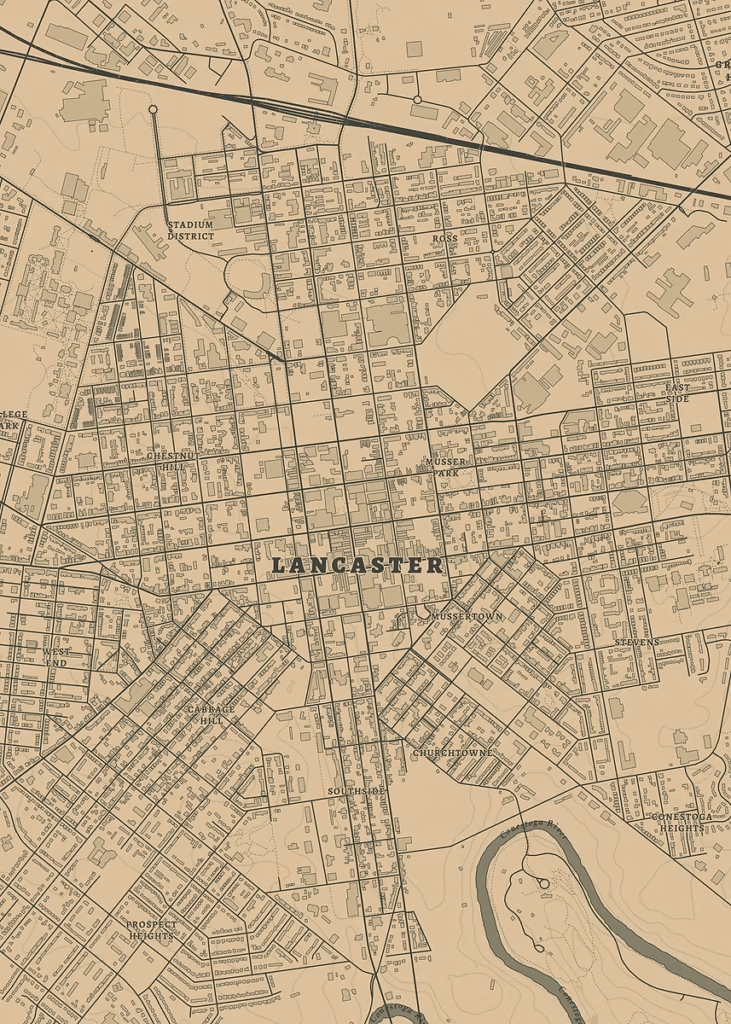
In the early 1730s, attorney and landowner James Hamilton laid out the future city on land inherited from his father, Andrew Hamilton. Rather than allowing development to occur randomly, Hamilton designed Lancaster using a grid system of straight streets and rectangular lots centered on what became Penn Square. This decision still shapes Lancaster’s urban form nearly 300 years later.
The original lots were relatively narrow and deep, encouraging a walkable pattern of development. Merchants lived above their shops, artisans worked near their homes, and churches, markets, and public buildings were within walking distance. Unlike many colonial towns, Lancaster was not built around a navigable river or harbor. Instead, it prospered because it sat at the crossroads of important transportation routes connecting Philadelphia to the Pennsylvania frontier.
Property Ownership as the Foundation of Community
From its earliest days, Lancaster’s growth was driven by the buying, selling, and subdivision of land.
Colonial landowners divided large tracts into smaller parcels that could be sold to settlers, craftsmen, merchants, and farmers. Every deed represented more than a real estate transaction, it represented the formation of a new household and the expansion of the community.
As Lancaster County was officially established in 1729, property records became essential tools of governance. Courthouses preserved deeds, wills, surveys, and land transfers that documented who owned land and how neighborhoods evolved over generations. Today, these records provide one of the clearest windows into Lancaster’s development.
The ownership structure created a distinctive pattern:
- Small urban lots fostered dense city neighborhoods.
- Larger tracts surrounding the city became farms and villages.
- Property transfers often stayed within families for generations.
- Religious communities developed around shared ownership patterns and cultural traditions.
The result was a county where land ownership became closely tied to identity, family history, and community stability.
Architecture as a Reflection of Ownership
Lancaster’s architecture tells the story of who owned property and what they valued.
Early German-speaking settlers brought building traditions from Europe, constructing stone houses with thick walls, steep roofs, and practical layouts designed for family life and agricultural work. These structures reflected a culture that viewed property as something to preserve and pass down.
As wealth increased during the eighteenth and nineteenth centuries, architecture became a visible expression of economic success. Merchants built elegant townhouses. Industrialists commissioned elaborate mansions. Churches and civic institutions invested in impressive public buildings.
By the Victorian era, Lancaster had become a thriving manufacturing center. Property values rose, neighborhoods expanded, and developers created entire blocks of rowhouses for workers and middle-class families. Much of the architecture visible today dates from this period.
What makes Lancaster unique is that many of these buildings survived. Rather than replacing entire neighborhoods during the twentieth century, much of the city’s historic fabric remained intact.
The Rise of Planned Neighborhoods
As transportation evolved, so did patterns of property development.
The arrival of railroads, trolley lines, and eventually automobiles allowed residents to live farther from the city center. Developers purchased larger parcels and transformed them into planned residential neighborhoods.
One notable example was the development of McGrann Park in the early twentieth century. Former fairgrounds and racetrack land were sold and redeveloped into one of Lancaster’s earliest planned suburban communities. Wide streets, landscaped lots, and coordinated housing designs reflected changing ideas about property ownership and neighborhood life.
These developments introduced a new model of community:
- Homeownership became a middle-class aspiration.
- Neighborhood identity grew around shared design standards.
- Developers shaped community character before residents arrived.
This pattern would continue throughout Lancaster County as suburbs expanded around the city.
Preservation as a Community Value
By the mid-twentieth century, many American cities demolished historic neighborhoods in favor of modern development. Lancaster largely chose a different path.
Residents recognized that their historic buildings represented more than old structures, they embodied the community’s collective memory. Local preservation efforts led to historic district protections and review processes that helped maintain neighborhood character while allowing growth and adaptation.
Today, Lancaster’s historic district contains more than 14,000 buildings and ranks among the largest urban historic districts in the United States. Preservation has become an economic and cultural asset, supporting tourism, local business development, and neighborhood pride.
Lancaster County: The Rural Counterpart
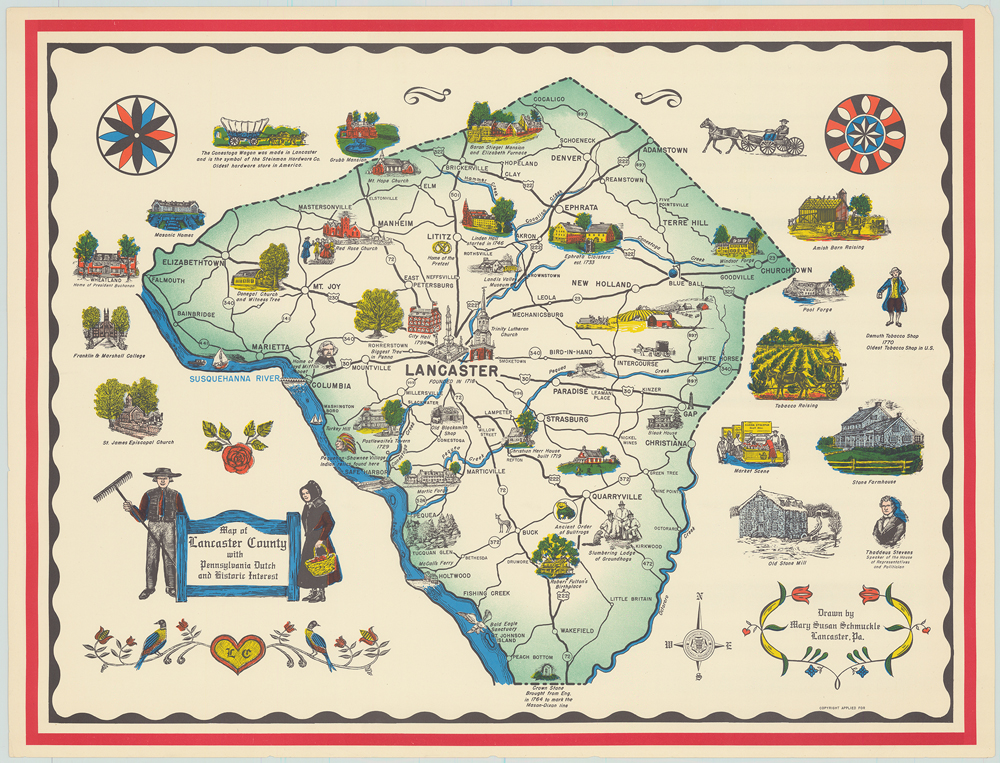
While Lancaster City developed through urban lot divisions and commercial growth, Lancaster County followed a different ownership model.
Large agricultural properties remained intact through generations of family ownership. Mennonite, Amish, and other Pennsylvania German communities emphasized stewardship, continuity, and productive use of land. Farms were often transferred within families, creating remarkable stability in the landscape.
This tradition explains why Lancaster County still possesses some of the most productive farmland in the nation. Unlike many regions where farmland was rapidly subdivided into housing developments, Lancaster maintained a strong agricultural identity rooted in long-term property stewardship.
The contrast between city and county became one of Lancaster’s defining characteristics:
- The city reflected commerce, density, and architectural innovation.
- The county reflected agriculture, continuity, and land preservation.
Together, they created the unique regional identity that exists today.
How Property Still Shapes Lancaster
The same forces that shaped colonial Lancaster continue to influence the region.
Historic districts affect redevelopment decisions. Property values influence neighborhood demographics. Farmland preservation programs protect agricultural landscapes. New housing developments raise questions about growth, affordability, and community character.
At its core, Lancaster remains a place where ownership and architecture are deeply connected. The grid laid out by James Hamilton, the deeds recorded in county archives, the rowhouses built by Victorian developers, and the family farms passed down through generations all contribute to a shared story.
Lancaster’s greatest architectural achievement may not be any single building. It is the community itself, a living landscape shaped by nearly three centuries of decisions about land, property, and belonging.
The history of Lancaster is ultimately the history of how people chose to build not just structures, but neighborhoods, institutions, and enduring communities.